
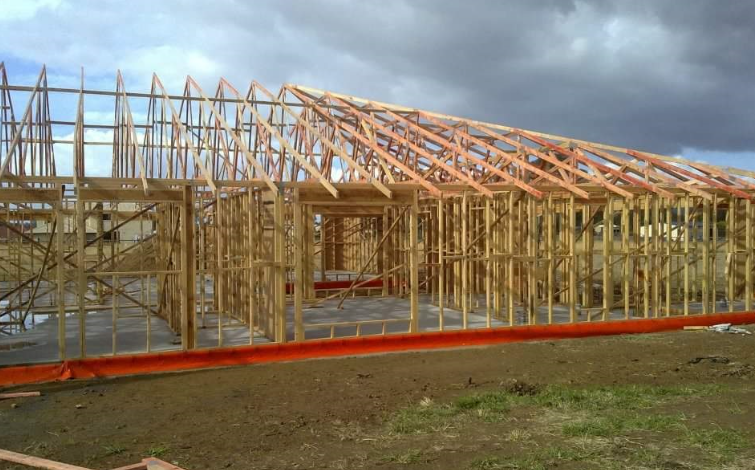
Looking at trusses on the Sunshine Coast? Between salt air, summer storms, and bushfire overlays, the right roof trusses Sunshine Coast choice can make a home quieter, stronger, and easier to live with for decades. This guide walks through the essentials —from profiles and materials to codes, costs, and maintenance —so homeowners, builders, and renovators can plan with confidence.
What Roof Trusses Do And Why They Matter In Coastal Homes
Load Paths, Spans, And Roof Shapes
Trusses create a predictable load path that safely carries the weight of roofing, ceilings, and wind/snow (well, not here) to the walls and footings. On the Sunshine Coast, they allow long, open spans for breezy living areas without interior load-bearing walls. Different profiles tune how loads move: web members handle tension/compression, while the top and bottom chords act like slender beams. The result is a lighter structure, quick installation, and consistent performance.
Coastal Weather Considerations: Wind, Salt, And Humidity
Coastal homes deal with gusty storms, salt-laden air, and high humidity. That means connections, coatings, and timber treatments matter as much as the truss shape. Correct wind classification (N2–N3 is common locally) drives connector plate sizes, tie-downs, and bracing. Salt accelerates corrosion, especially within about 1 km of breaking surf, so fastener grade and steel coatings must be matched to the marine environment. Good ventilation helps manage moisture, keeping timber and insulation healthy over time.
See also: Exploring Short Term Rentals in Adelaide: Your Home Away From Home
Truss Types And Materials Suited To The Sunshine Coast
Common Profiles: Fink, Howe, Pratt, Hip, And Scissor
- Fink: Efficient web pattern for standard gable roofs: great value and quick to erect.
- Howe/Pratt: Useful when specific point loads or mechanical services need clear routes.
- Hip trusses: Pre-fabricated hip sets simplify complex hips/valleys on coastal pavilion designs.
- Scissor: Creates vaulted ceilings for airy living rooms without the need for site-built rafters.
Many Sunshine Coast homes blend hip sets with a few girder trusses to carry valleys and verandahs. For coastal pavilions with large openings, designers may specify truncated girder or truncated standard trusses, along with strong tie-down detailing.
Timber Treatments And Steel Corrosion Protection
- Timber: H2 or H3 treatment per AS 1604 is typical. LOSP-treated pine is common for nail-plated trusses because it’s dimensionally stable: H3 is preferred for exposed members or where condensation risk is higher. Keep cut ends sealed.
- Plates/Connectors: Nailplates comply with AS/NZS 1649 and are sized by the truss software/engineer. In marine zones, specify enhanced corrosion protection.
- Steel options: For steel trusses or hardware, use coatings to AS/NZS 2312: hot-dip galvanizing or ZINCALUME/galvanized sheet (AS 1397) with adequate coating mass. Fasteners and straps should be Class 3 or 4, and near surf zones, 316 stainless for exposed fixings is worth the upgrade.
Codes, Ratings, And Engineering Requirements
AS/NZS Standards, Wind Regions, And Cyclone Categories
Designers on the Sunshine Coast typically reference:
- AS/NZS 1170.2 for wind actions: The region is generally Wind Region B (non-cyclonic), with many sites falling into N2–N3 classifications depending on terrain and shielding. Hilltops and beachfronts can bump the rating.
- AS 1684 for residential timber framing: sets tie-downs, bracing, and fixings.
- AS 1720.1 (timber design) and AS 4440 (installation of nail-plated timber roof trusses).
- For steel, AS/NZS 4600 (cold-formed) or AS 4100 (steel structures).
Even though cyclone categories (C and D) apply farther north, engineers still check local wind speeds, terrain categories, and importance levels to correctly size connectors and bracing.
Bushfire Attack Levels (BAL) And Thermal Performance
Parts of the Sunshine Coast map to BAL-12.5 up to BAL-40 on bush-adjacent sites. AS 3959 governs ember protection: sarking with taped laps, metal ember guards at vents, and compliant eaves/soffits. Thermal performance must meet the NCC: pairing well-detailed trusses with continuous sarking and correctly installed R-values supports NatHERS targets while keeping summer heat at bay.
Design, Cost, And Installation Timeline
From Site Measure To Certified Shop Drawings
A typical flow looks like this:
- Site measure and roof layout from plans or a frame check.
- Truss engineering is done using proprietary software, then reviewed by a qualified engineer.
- Certified shop drawings issued to the builder for approval.
- Fabrication in a controlled factory, with QA checks on plates, webs, camber, and identification tags.
This stage usually takes 1–3 weeks, depending on complexity and the trusses Sunshine Coast workload at the time.
Delivery, Crane Lifts, On-Site Safety, And Typical Costs
- Delivery and crane: A medium home often requires a 1–2-hour crane slot. Clear set-down space speeds installs.
- Safety: Edge protection, fall-arrest, and temporary bracing per AS 4440 are non-negotiable.
- Costs (indicative only): Small homes might see $6,000–$12,000 for supply; larger/complex roofs $15,000–$30,000. Crane and installation can add $2,000–$5,000+. Lead times range 2 to 5 weeks in standard seasons; storm rebuild spikes can extend that.
Choosing A Sunshine Coast Truss Supplier
Licensing, Warranty, And Quality Assurance Checks
Look for QBCC-licensed fabricators, current professional indemnity for engineering, and written warranties on materials and workmanship. Ask about:
- Compliance with AS 4440 and AS 1684
- Plate brand certification and batch traceability
- In-house vs independent engineering sign-off
- Marine-grade fastener options for coastal proximity
Comparing Quotes, Lead Times, And Inclusions
When comparing trusses Sunshine Coast quotes, line up apples with apples:
- Inclusions: girder trusses, hip sets, valley creepers, bracing, straps, fixings, delivery, and crane time.
- Engineering: Are certified drawings and wind classification noted?
- Program: Guaranteed lead time, shop drawing turnaround, and booking windows for cranes.
- Support: site measurement, installation guides, and after-sales support if layouts change.
Maintenance And Future Modifications
Inspections, Ventilation, Fasteners, And Coastal Upkeep
Annually (and after major storms), they should check roof space ventilation, look for rust bloom on plates or fixings, and confirm temporary bracing wasn’t left in place. In marine zones, upgrade exposed screws to 316 stainless when replacing roofing or gutters. Keep insulation clear of eaves vents and ensure sarking is intact to manage condensation.
Planning For Renovations, Skylights, Solar, And Extra Loads
Cutting truss members without engineering is a fast track to trouble. For skylights, create trimmer frames detailed by the engineer. Solar adds around 10–20 kg/m²: advise the truss supplier so they can account for point loads, access paths, and wind uplift on panels. Thinking about a future deck roof? Flag that up-front to include a girder truss or connection points now.
Conclusion
On the Sunshine Coast, good trusses aren’t just shapes on a plan; they’re the backbone of a calm, durable roof. Choose the right profile and protection, insist on compliant engineering, and partner with a local supplier who understands wind, salt, and BAL. Do that, and the roof will keep the home in good condition for a very long time.


