The realm of manufacturing has undergone considerable transformations over the past few decades. One of the most significant revolutions within this field has been the advent and refinement of laser cutting technology. Precision fabrication now operates at levels of intricacy and efficiency that old-school methods cannot match, pushing the boundaries of what can be achieved in terms of design and production quality.
The Intricacies of Laser Cutting Technology
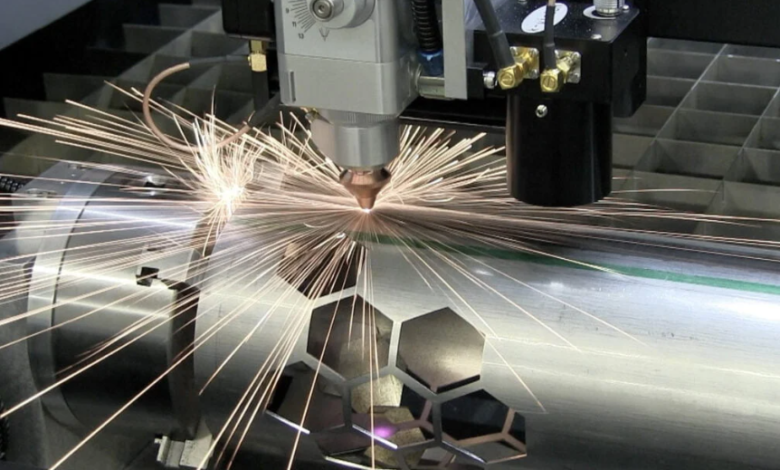
Laser cutting is a sophisticated fabrication technique that utilises high-powered lasers to accurately cut materials into custom shapes and sizes. Through a combination of precision optics and computer numerical control (CNC), laser cutters can produce intricate details with excellent finish quality. The process involves directing a focused laser beam—which generates heat exceeding thousands of degrees Celsius—through material, which melts, burns, or vaporises, depending on the intensity and duration of the laser pulse.
Unmatched Precision and Consistency
One of the defining characteristics of laser cutting is its unrivalled precision. This is fundamental in industries where the slightest deviation can lead to compromised structural integrity or function of a product. The technology enables the execution of extremely accurate cuts with clean edges, requiring little to no finishing work. This precision is maintained consistently across mass production runs, which is crucial for maintaining quality in high-volume product manufacturing.
See also: Best Tech News Sources Feedworldtech
The Versatility of Laser Cutting
Few fabrication methods match the versatility that laser cutting offers. It is adept at handling a variety of materials, including metals, plastics, wood, glass, fabric, and even paper. Adjustments to laser settings allow for easy transitions between materials and thicknesses. This versatility expedites the manufacturing process by eliminating the need for multiple tools and machines, enabling manufacturers to swiftly adjust production lines to meet the changing demands and design requirements of their products.
Design Complexity and Customisation
The detailed capabilities of laser cutting technology translate into another significant advantage: design complexity. Unlike traditional mechanical cutting methods, there are no physical restraints on the laser’s cutting path. This freedom enables the creation of intricate patterns and shapes that would otherwise be impossible or financially unfeasible to produce. Customisation for specific applications or customer preferences can be achieved quickly and economically, giving businesses an edge in a competitive marketplace.
Cost-Effective Production
Efficiency is a cornerstone of any profitable manufacturing operation. Laser cutting systems streamline the production process by minimising material wastage and reducing the need for multiple setups. As a contactless cutting method, it eradicates tool wear, thereby reducing upkeep expenses. Moreover, the automation component—one that ties in with CNC technology—cuts down on manual labour and the potential for human error, which, in turn, optimises production time and cuts costs on several fronts.
Laser Cutting’s Impact on Various Industries
Several industries have felt the impact of laser cutting in profound ways. In aerospace, a sector where precision and safety are paramount, the technology enables the creation of complex components with the exacting tolerances required. The automotive industry benefits from laser cutting in designing lightweight and robust parts that contribute to fuel efficiency and vehicle performance. The technology has also made inroads into fashion and design, where its ability to work with a diverse range of textures and materials allows for innovative and customised creations.
Enhanced Safety and Sustainability
While efficiency and precision are vital, safety and sustainability are equally critical components of modern manufacturing. Laser cutting is inherently safer than mechanical cutting processes, as there’s no risk of injury from sharp moving parts. Furthermore, the precision of laser cutting results in less material waste, aligning with sustainable manufacturing principles by reducing the resources needed and promoting recyclability.
Adaptability to Future Innovations
Laser cutting is not a static technology. It continues to evolve and adapt, integrating advancements like artificial intelligence (AI) and machine learning to further enhance its capabilities. These innovations promise to create smarter and more responsive cutting systems, which will fine-tune processes and reduce production timelines even further. With the pace of technological development, laser cutting is well-positioned to remain at the forefront of manufacturing innovations.
Conclusion
The landscape of precision fabrication has been irrevocably changed by laser cutting technology. Manufacturing now thrives on the precision, versatility, and cost-effectiveness that laser cutting offers. Whether it’s producing complex components with micron-level accuracy or enabling the swift customisation of designs, the technique has proven itself indispensable across various sectors. Laser cutting embodies the confluence of innovation, efficiency, and quality, heralding a future where the limits of manufacturing are continually redefined.
With every meticulously crafted component and every minute of saved production time, laser cutting technology continues to bolster its status as a revolutionary force in modern manufacturing. Its precision and versatility not merely reflect the provisions of a single manufacturing method but indeed symbolise the transformative power of technology when applied to the art of creation. As industries worldwide adopt this advanced technique, the future of fabrication looks brighter—and more precise—than ever before.